





 +41 22 880 28 88
 +33 1 41 69 88 88 (Paris)
 +352 26 20 25 53 88
 +971 55 303 5161
 +66 92 372 4680

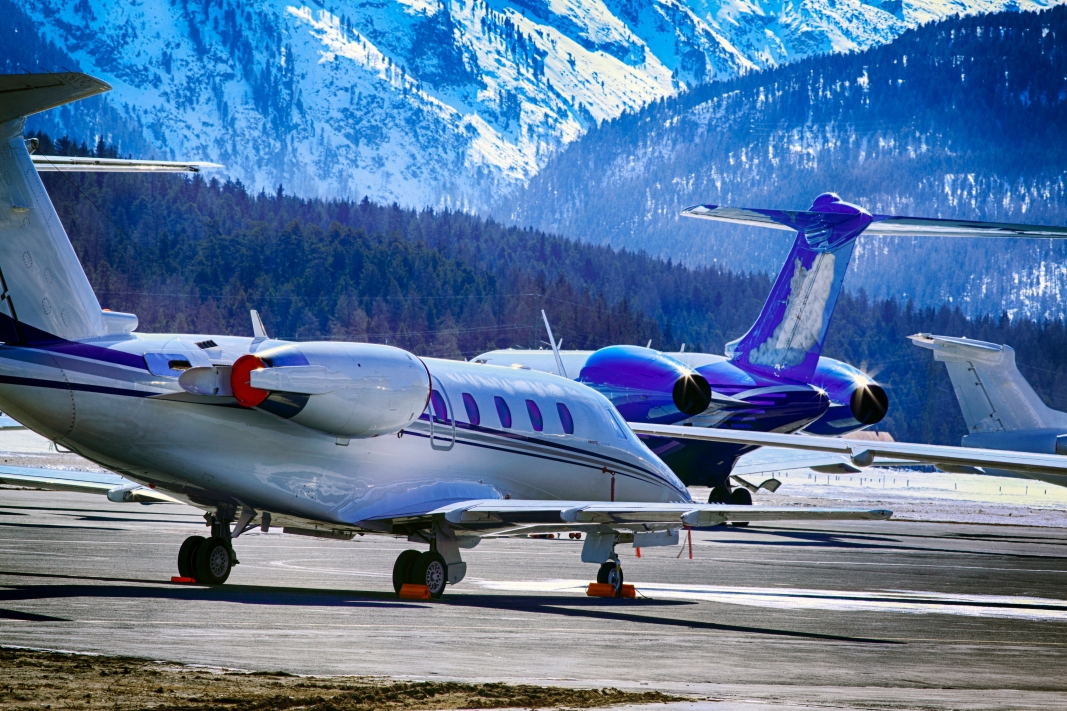
Private Jet De-Icing: Process, Cost and Holdover Time
Why de-icing is mandatory before take-off
Even a thin layer of frost disrupts the airflow over the lifting surfaces: lift decreases, drag increases and the mobility of the control surfaces can be impaired. Regulation therefore frames every winter departure. In Europe, rule CAT.OP.MPA.250 of Regulation (EU) No 965/2012 states that the commander may only commence take-off if the aircraft is clear of any deposit that might adversely affect its performance or controllability.
In practice, the crew inspects the critical surfaces before the flight, visually and, where required, by touch. The decision to de-ice belongs to the captain and is not negotiable: no commercial schedule takes precedence over it. This "clean aircraft" principle organises all winter ground operations.
How a private jet is de-iced, step by step
The operation is carried out by dedicated bucket trucks, either on the stand or on a dedicated de-icing pad. The reference procedure, described in SAE standard AS6285 and in Transport Canada's ground icing guidelines, most often involves two steps. The first sprays a Type I de-icing fluid, a heated water-glycol mixture, typically at 60 to 82 °C at the nozzle: heat and pressure melt the contamination and flush it off the surfaces, applied symmetrically to preserve the aircraft's aerodynamic balance.
The second step protects the work of the first. A thickened anti-icing fluid (Type II, III or IV) is applied as a protective film, ideally within 3 minutes of the de-icing step, before the first fluid can freeze. Passengers may generally remain on board during the operation, most of the treatment taking place with engines off or according to the airport's own procedure.
| Fluid | Role | Application | Holdover time |
| Type I (AMS 1424 standard) | De-icing: removing frost, ice and snow | Heated, sprayed under pressure | Very short, a few minutes in precipitation |
| Types II and III (AMS 1428 standard) | Anti-icing: preventing reformation | Thick film on clean surfaces | Intermediate |
| Type IV (AMS 1428 standard) | Reinforced anti-icing | Thick film, often dyed green | The longest, up to several hours in active frost |
Holdover time, the factor that decides the departure
The least known aspect of de-icing is its holdover time. The protection offered by the anti-icing fluid runs out minute by minute: it is measured using tables published every winter by the FAA and Transport Canada, which cross-reference the fluid type, the outside air temperature and the intensity of the precipitation. A Type I fluid protects for only a few minutes in snow or freezing rain; a Type IV can last several hours in active frost, but markedly less in sustained snowfall.
If the holdover time is exceeded before take-off, the crew must carry out a contamination inspection immediately before the take-off run, or have the aircraft sprayed again. Otherwise the aircraft returns to the de-icing pad: the delay grows longer and the operation is billed a second time. This is why, on snowy mornings, queues at de-icing pads can add 30 to 60 minutes to a departure according to industry estimates, and why the anti-icing step is applied as late as possible, when the aircraft is ready to leave.
One useful clarification: these fluids protect the aircraft on the ground only. In flight, ice protection relies on the aircraft's onboard systems (heated leading edges, pneumatic boots), a separate subject covered in our article on weather conditions and flight organisation.
How much does it cost to de-ice a private jet
The invoice follows a simple model: the quantity of fluid used, multiplied by a price per litre set locally, plus the ground team's service charge. Volume depends directly on aircraft size: in the order of 200 to 300 litres for a light jet, 450 litres and more for a long-range jet, according to estimates published by industry operators. The price per litre varies from one airport to another, and Type IV anti-icing fluid costs more than Type I.
As an indication, a straightforward de-icing most often comes to between €1,000 and €3,000 for a light or midsize jet, and can exceed several thousand euros for a long-range aircraft or after heavy snow accumulation. When conditions require the anti-icing step, the total cost can almost double. This expense is invoiced after the flight, on top of the charter price, and in the vast majority of cases it is borne by the client, at cost price. For a complete view of the cost structure of a charter, see our page on private jet rental costs.
Hangar, insurance, timing: how to reduce the bill
Several options can reduce, or even avoid, the need for de-icing. The most effective is the heated hangar: an aircraft kept in a hangar overnight does not ice over, and the cost of renting the hangar often remains lower than a full de-icing. This option does, however, require the aircraft to position the day before and a hangar to be available at the relevant airport.
The second route is de-icing insurance: some operators and brokers offer it as an option, taken out in advance for the season or for a given trip, to neutralise the financial risk. The third lever is timing: when the schedule allows, departing after the morning frost has cleared avoids the operation altogether. Finally, manual methods (sweeping, scraping) reduce the quantity of fluid required, a practice encouraged by the authorities to limit both cost and environmental impact.
The broker's role: anticipating de-icing
As an independent broker, IBC Aviation compares the aircraft available and organises your flight: our role is precisely to anticipate these questions before they turn into a delay or a surprise on the invoice. Our teams check with the operator whether a hangar or de-icing insurance is available, state in the quotation that any de-icing is billed at cost, and advise you on the timing or the airport best suited to winter conditions. You can discover our approach on the private jet charter page and consult our frequently asked questions about chartering.
Private jet charter with IBC Aviation:
Our teams advise you on the private jet best suited to your itinerary and requirements, and organise your trip to or from your destination. Available 24/7:
- France: +33 1 41 69 88 88
- Switzerland: +41 22 880 28 88
- Dubai: +971 55 303 5161
- Bangkok: +66 92 372 4680
- Email: contact@ibc-aviation.com
Frequently asked questions
Is de-icing mandatory before take-off?
Yes. European regulation (CAT.OP.MPA.250) forbids the commander from commencing take-off if any deposit of frost, ice or snow liable to affect the aircraft's performance adheres to its surfaces. The decision to de-ice belongs to the captain and is not negotiable.
How long does it take to de-ice a private jet?
The operation itself generally takes 10 to 20 minutes, depending on the size of the aircraft and the accumulation observed. On snowy mornings, however, queuing at the de-icing pads can add 30 to 60 minutes to the departure, according to industry estimates.
How much does it cost to de-ice a private jet?
As an indication, most invoices fall between €1,000 and €3,000 for a light or midsize jet, and more for a long-range aircraft or after heavy accumulation. The price depends on the litres used, the airport's per-litre rate and the possible anti-icing step, which can almost double the bill.
Who pays the de-icing fees?
In the vast majority of cases, the client. De-icing and anti-icing fees are invoiced at cost price after the flight, on top of the charter price, unless de-icing insurance has been taken out in advance with the operator.
Can de-icing be avoided?
Yes, in certain cases: keeping the aircraft in a heated hangar the night before departure, shifting the schedule until the morning frost has cleared, or taking out de-icing insurance. Our teams check these options with the operator when preparing your flight.