





 +41 22 880 28 88
 +33 1 41 69 88 88 (Paris)
 +352 26 20 25 53 88
 +971 55 303 5161
 +66 92 372 4680

FIFA World Cup 2026: The Business Aviation Challenge
From 11 June to 19 July 2026, the 23rd edition of the FIFA World Cup takes place across three countries simultaneously for the first time: the United States, Canada and Mexico. 48 teams, 104 matches, 16 host cities, six million visitors expected. Behind the sporting spectacle, business aviation is bracing for one of the greatest operational challenges of the decade.
48 teams, 16 cities, 3 countries: an unprecedented format
The 2026 World Cup introduces an expanded format of 48 nations, up from 32 in previous editions. The host cities are divided into three distinct geographical regions:
- Western Region: Vancouver, Seattle, San Francisco, Los Angeles
- Central Region: Guadalajara, Mexico City, Monterrey, Houston, Dallas, Kansas City
- Eastern Region: Atlanta, Miami, Toronto, Boston, Philadelphia, New York / New Jersey
The opening match takes place at the Estadio Azteca in Mexico City, with Mexico facing South Africa. The final will be held on 19 July at MetLife Stadium in East Rutherford, New Jersey, renamed "New York New Jersey Stadium" for the occasion. For the first time in the tournament's history, a half-time show is scheduled, featuring Madonna, Shakira and BTS.
Air travel demand set to rise 200% to 300% on key routes
Industry forecasts are unprecedented. On the strategic routes linking host cities, business aviation demand is expected to rise by 200% to 300% compared with a standard month of June. The six million visitors expected place exceptional pressure on aircraft availability, airport slots and ground handling services.
Operators are observing a new phenomenon: requests for multi-city itineraries are arriving several months in advance, often still at an exploratory stage, as travellers gauge availability and operational constraints. This early planning reflects the complexity of a competition that, for those following several stages, demands repeated transcontinental journeys.
Why the American Northeast concentrates the pressure
The New York area illustrates the challenges ahead. Teterboro Airport (KTEB), the usual business aviation gateway to Manhattan, enforces a maximum take-off weight limit of 100,000 lbs (45 tonnes). This constraint effectively excludes ultra-long-range aircraft such as the Global 7500 and the Gulfstream G650, which must divert to Newark (KEWR), Westchester (KHPN) or Stewart (KSWF).
As the final approaches, FBO parking fees in the region can exceed US$30,000 for a single aircraft over the duration of the tournament. The scarcity of stands requires, as with the Monaco Grand Prix, a guaranteed prior reservation before any flight plan is filed.
Long-range jets on the front line
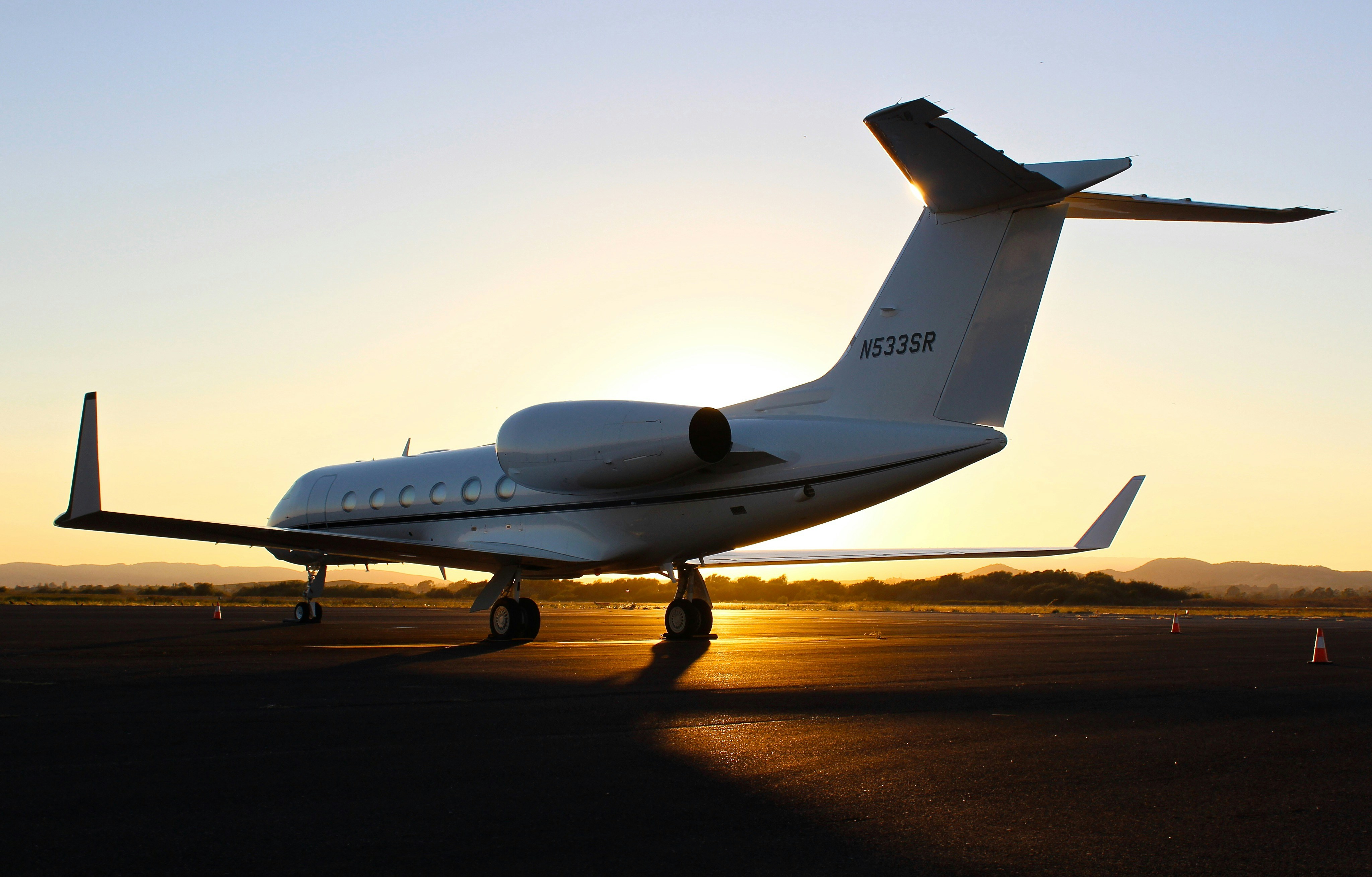
For European, Asian and Middle Eastern travellers, the crossing to North America calls on the finest ultra-long-range aircraft. The Falcon 6X, Falcon 8X, Global 7500 and Gulfstream G650 handle the majority of non-stop transatlantic links.
The distances actually covered during the tournament call for precise logistical planning:
- Paris – New York: 5,850 km, 8 hours
- Geneva – Miami: 7,950 km, 10 hours 30 min
- London – Los Angeles: 8,750 km, 11 hours
- Dubai – Mexico City: 14,200 km, 17 hours (with a technical stop)
- Tokyo – Vancouver: 7,600 km, 10 hours
Connecting between host cities
Following a team through the group stage can involve three cities in seven days. Internal connections represent an often-underestimated aspect of the planning:
- New York – Miami: 1,750 km, 2 hours 30 min
- Los Angeles – Mexico City: 2,500 km, 3 hours 30 min
- Toronto – Dallas: 2,050 km, 3 hours
- Vancouver – San Francisco: 1,300 km, 2 hours
- Atlanta – Philadelphia: 1,100 km, 1 hour 45 min
These rapid sequences justify dedicating a single aircraft for the duration of the tournament rather than a series of one-off charters. Continuity of crew and stable overflight permissions considerably simplify cross-border operations between the three host countries.
Three audiences, three logics
Beyond affluent supporters, the World Cup mobilises three distinct categories of business aviation travellers.
Sporting delegations and their families
Players, technical staff, families and agents form a specific kind of demand. Confidentiality, security, scheduling flexibility and the capacity to carry larger groups steer choices towards heavy jets and ultra-long-range aircraft, often operating from recurring bases.
Sponsors and corporate leaders
The competition brings together the world's leading advertisers and their partners. For these travellers, the World Cup becomes a concentrated arena for business meetings, justifying intelligent itineraries that combine matches with professional appointments across several host cities.
HNWI enthusiasts
A private clientele organises their travel around the major matches, the finals and the ceremonies. Discretion, swift access to stadiums from business airports and coordination with high-end accommodation are the main criteria.
Planning ahead: the golden rule for the 2026 World Cup
With ten days to kick-off, the booking window is closing fast on the most sought-after routes. Aircraft availability, securing parking stands and coordinating cross-border permissions all require an experienced broker able to mobilise a network of partner operators across the three host countries.
IBC Aviation arranges private jet travel to every host city, from Europe as well as between the competition venues. Non-stop transatlantic flights, inter-city links, slot and FBO stand management: each itinerary is built to measure and overseen by a dedicated advisor.
Plan your 2026 World Cup with IBC Aviation
To book your private jet flight to the United States, Canada or Mexico and secure your inter-city links, contact our teams 24/7.
- France: +33 1 41 69 88 88
- Switzerland: +41 22 880 28 88
- Email: contact@ibc-aviation.com