




 +41 22 880 28 88
 +33 1 41 69 88 88 (Paris)
 +352 26 20 25 53 88
 +971 55 303 5161
 +66 92 372 4680

Falcons, Dogs and Horses: Which Animals Travel by Private Jet?
The private jet, an advantage for travelling with an animal
The main benefit lies in the cabin. On a private flight, the animal stays with its owner, with no hold and no separation, in a calm, controlled environment. The walk through the business terminal is quick, and operators accept a wider range of sizes and breeds than a scheduled airline.
This flexibility explains the rise of animal travel in business aviation. A large fractional operator reported hosting close to 20,000 animals in 2019, while another operator noted an 86% increase in animal travel between September 2019 and September 2021. Demand centres on dogs and cats, but it extends to more unexpected passengers.
The falcon, a remarkable private-aviation passenger
In the Gulf, the falcon is no ordinary animal. A national symbol in the United Arab Emirates, it sits at the heart of a hunting tradition thousands of years old. Falconry has been inscribed on UNESCO's Representative List of the Intangible Cultural Heritage of Humanity since 2010, a list since extended to around twenty countries, including the United Arab Emirates, Qatar and Saudi Arabia.
To travel with their birds, falconers hold a unique document: the falcon passport. Introduced in 2002 by the United Arab Emirates in cooperation with CITES, the convention on international trade in endangered species, it enables legal cross-border movement of hunting falcons and helps curb trafficking. More than 28,000 passports are reported to have been issued since its creation.
On scheduled flights, several Gulf carriers accept falcons in the cabin under strict conditions. The table below sums up the two benchmark policies.
| Airline | Cabin classes | Main conditions |
| Qatar Airways | Economy class only | Bird hooded and tethered, 6 falcons (narrow-body) to 12 (wide-body) per flight |
| Etihad Airways | All classes, including First | Bird hooded, 1 to 2 falcons per seat depending on class |
A photo that went viral, authenticated as genuine, shows dozens of hooded falcons strapped into aircraft seats. Their exact number, their owner and the flight itself have never been confirmed, however: the image is anecdote rather than verified fact.
This is exactly where the private jet comes into its own. On a chartered aircraft, the falcon travels hooded and perched beside its owner, with no cap on numbers, no class restriction and no hold. For clients used to travelling to or from hunting grounds, that discretion and control make the difference. IBC Aviation, whose Dubai and Fujairah offices anchor its Middle East presence, regularly arranges such flights to or from the Gulf, which you can explore through our private jet charter in Dubai page.
Dogs and cats: the most frequent companions
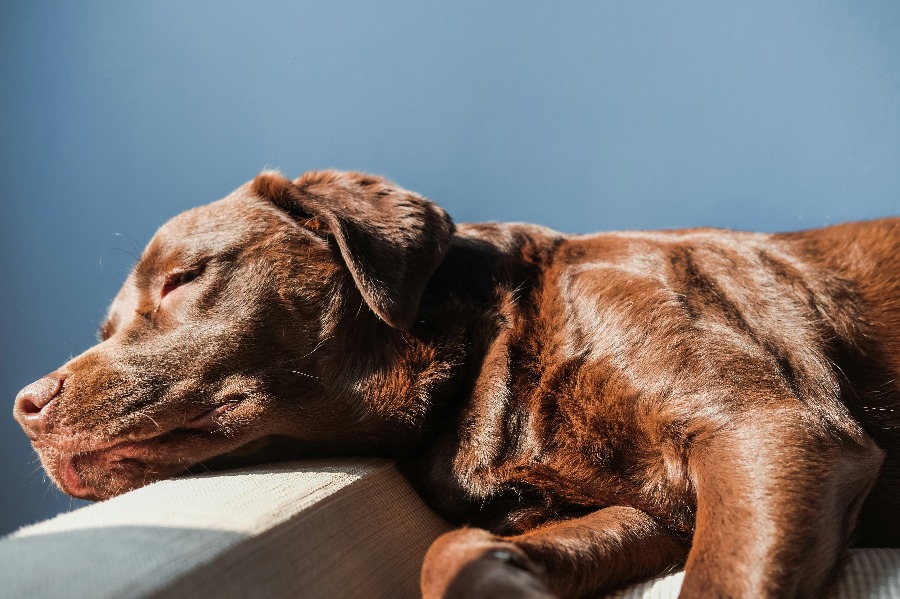
Dogs and cats make up the vast majority of animals on board. On a private jet they travel in the cabin rather than the hold, which sharply reduces the stress of the journey and allows sizes a standard airline would often refuse. The owner keeps the animal close throughout the flight.
A few practical rules apply depending on the operator. An animal over around fifteen kilos may need its own seat for take-off and landing, and calm behaviour is preferable in the cabin. Our teams set out these conditions case by case when arranging the flight, according to the aircraft chosen from our fleet.
Horses, rare and exotic animals
Not every animal travels in the cabin. Racehorses and competition horses fly aboard specialist freighter aircraft, where they are placed in stalls and accompanied in flight by grooms and a veterinarian. For the 2018 World Equestrian Games, for example, the carrier Emirates SkyCargo moved close to 500 horses on 19 flights, with 227 grooms; more than 300 horses were transported for the Tokyo Games.
Exotic and zoo animals likewise rely on specialist air cargo, under CITES permits and veterinary supervision. These movements bear no resemblance to a cabin flight: they follow dedicated protocols, separate from passenger business aviation.
Passport, microchip and CITES: the rules to know
For dogs, cats and ferrets, the EU pet passport is the key document for travel within the European Union. It requires a standard-compliant microchip, fitted before the rabies vaccination, an animal at least twelve weeks old at the time of that vaccination, and a wait of at least twenty-one days before departure. The passport remains valid for life as long as the vaccination is kept up to date.
Outside the European Union, each country applies its own rules: additional vaccines, health certificates and, in some cases, quarantine periods. For falcons and protected species, CITES governs international movement: the peregrine falcon and the gyrfalcon are listed in Appendix I, the saker falcon in Appendix II, and any cross-border transport requires the matching permits and health certificates.
Arranging a flight with your animal
In response to growing demand for specialised transport, IBC Aviation has created two dedicated divisions, IBC PETS and JUNGLE JET, presented on our traveling with pets page. As an independent broker, we compare the available aircraft and coordinate every formality, from health documents to permits, working with our concierge services where needed. Our teams advise you on the most suitable private jet for your itinerary and your needs. To discover our approach, see our private jet charter page. Available 24/7:
- France: +33 1 41 69 88 88
- Switzerland: +41 22 880 28 88
- Dubai: +971 55 303 5161
- Bangkok: +66 92 372 4680
- Email: contact@ibc-aviation.com
Frequently asked questions
Can you travel with a falcon on a plane?
Yes. Several Gulf carriers, such as Qatar Airways and Etihad Airways, accept falcons in the cabin, hooded and tethered, under specific conditions. On a private jet, the falcon travels beside its owner, with no cap on numbers and no class restriction.
What is the falcon passport, and how long has it existed?
The falcon passport was introduced in 2002 by the United Arab Emirates in cooperation with CITES. It allows legal cross-border movement of hunting falcons and helps curb trafficking. More than 28,000 passports are reported to have been issued since its creation.
Which animals can you take on a private jet?
Most often dogs and cats, which travel in the cabin rather than the hold, along with falcons for Gulf clients. Horses and exotic animals, by contrast, travel aboard specialist freighter aircraft rather than in a business-jet cabin.
Do you need a CITES permit to transport a falcon?
Yes. Falcons are species protected by CITES: the peregrine falcon and the gyrfalcon fall under Appendix I, the saker falcon under Appendix II. Any international transport requires the relevant CITES permits and health certificates.
How do you travel with your dog or cat within the European Union?
You need an EU pet passport, a microchip fitted before the rabies vaccination, an animal at least twelve weeks old at vaccination and a wait of at least twenty-one days before departure. Outside the European Union, additional rules and quarantine periods may apply.