




 +41 22 880 28 88
 +33 1 41 69 88 88 (Paris)
 +352 26 20 25 53 88
 +971 55 303 5161
 +66 92 372 4680

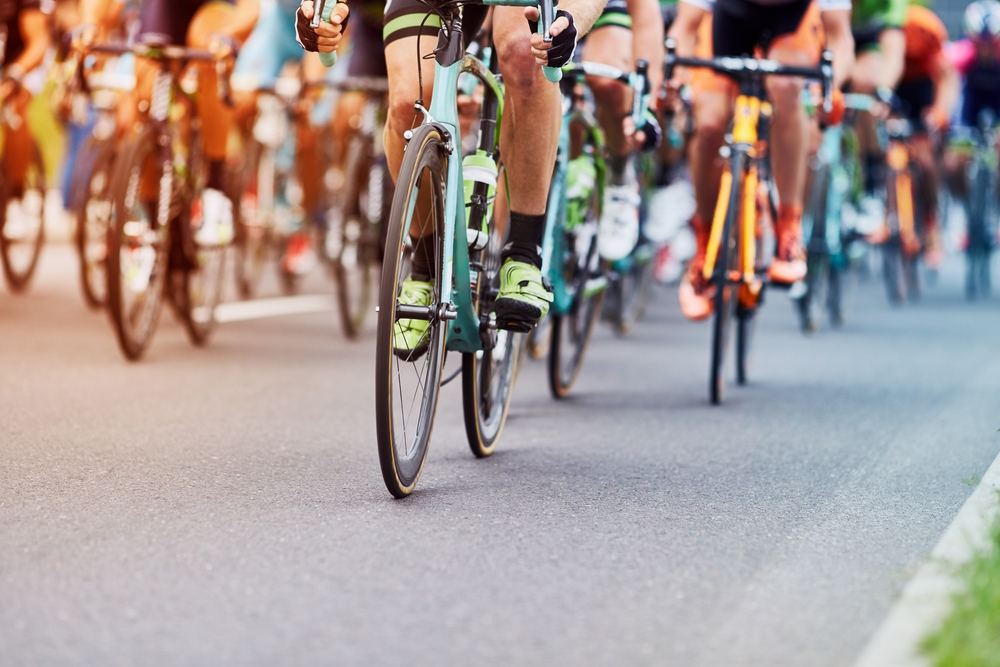
Tour de France 2026 by Private Jet: 3,320 km, 21 Stages
Why follow the Tour de France 2026 by private jet?
Business aviation allows you to reach the stage towns in a matter of hours, without the constraints of commercial flights. You board in 15 minutes, land in the immediate vicinity of the town centre and adapt your programme according to the standings. Our teams coordinate transfers, accommodation and reservations for a seamless stay.
This 113th edition features 7 flat stages, 4 hilly stages, 8 mountain stages with 5 summit finishes, 1 team time trial and 1 individual time trial. Two rest days are scheduled, in the Cantal on 13 July and in Haute-Savoie on 20 July.
Barcelona, Grand Départ from Spain
The 2026 Tour opens with a 19.6 km team time trial through the streets of Barcelona, for the first time since 1971. Stage 2 links Tarragona to Barcelona over 168.5 km, before the race crosses the Pyrenees.
Private jet access:
- Barcelona-El Prat Airport (BCN) : business terminal, all aircraft categories
- Sabadell Airport (QSA) : dedicated business airport, alternative to El Prat
- Helicopter transfer : possible from the airport to the Montjuïc circuit
Pau and Bordeaux, between the Pyrenees and the Atlantic
After crossing Ariège and the Basque Country, the peloton reaches Pau on 8 July for a flat stage, then tackles the Col du Tourmalet the following day, with a first-ever finish at Gavarnie-Gèdre. On 10 July, the race heads to Bordeaux for a flat stage suited to the sprinters.
Private jet access:
- Pau-Pyrénées Airport (PUF) : 15 minutes from the centre, all categories
- Bordeaux-Mérignac Airport (BOD) : business terminal, 30 minutes from the centre
- Bergerac Dordogne Périgord Airport (EGC) : 10 minutes from Bergerac, light jet and turboprop
Chambéry and the Alps, the heart of the race
After the Massif Central and the Vosges, the Tour heads back to the Alps. Chambéry hosts the start of stage 17 on 22 July, bound for Voiron. The following day, the race climbs towards Orcières-Merlette, a legendary site where Luis Ocaña distanced Eddy Merckx in 1971.
Private jet access:
- Chambéry Airport (CMF) : highly popular summer and winter, 15 minutes from the centre. Operates on a slot system
- Annecy Airport (NCY) : alternative, shorter runway, qualified crews required
- Grenoble Airport (GNB) : alternative without particular constraints
- Geneva Airport (GVA) : 1 hour from Chambéry, main hub with dedicated business terminal
For more on alpine access, see our article on ski resorts by private jet.
Gap and Alpe d'Huez, the summit finishes
The last two mountain stages are the most eagerly awaited. On 24 July, Gap – Alpe d'Huez over 127.9 km, then on 25 July, Le Bourg-d'Oisans – Alpe d'Huez over 170.9 km, with the Col de Sarenne via its south-eastern flank. The Col du Galibier, at 2,642 m, will be the high point of this edition.
Private jet access:
- Gap airfield : significant restrictions, poorly suited to private jets
- Grenoble Airport (GNB) : 1 hour 15 minutes from Alpe d'Huez, all categories
- Lyon-Saint-Exupéry Airport (LYS) : 2 hours from Alpe d'Huez, full capacity
- Helicopter transfer : possible from Grenoble or Lyon to Alpe d'Huez
Paris, the Champs-Élysées tradition
The 21st and final stage departs from Thoiry on 26 July for Paris over 132.5 km. Three ascents of the Butte Montmartre are on the programme before the traditional finish on the Champs-Élysées.
Private jet access:
- Paris-Le Bourget (LBG) : Europe's leading business aviation airport, 11 km from the centre
- Paris-Pontoise (LFPT) : alternative to the north-west, light and midsize jet
- Toussus-le-Noble (LFPN) : turboprops, 30 km to the south-west
- Issy-les-Moulineaux heliport : 15 minutes from Le Bourget by helicopter
For more details on Parisian airports, see our page on airports welcoming private jets.
Which aircraft to choose for following several stages?
The choice of aircraft depends on the distance between your target stages and the number of passengers:
- Turboprop : 6 to 9 seats, ideal for short hops between nearby stage towns (Barcelona – Pau, Bordeaux – Bergerac)
- Light jet : 6 to 8 seats, suited to European legs of 2 to 3 hours (Paris – Barcelona, Geneva – Pau)
- Midsize jet : 7 to 9 seats, superior comfort for intermediate journeys
- Heavy jet : 8 to 14 seats, for long distances or larger groups
IBC Aviation, an independent broker, compares available aircraft on the global market and selects the most suitable for your itinerary. For a personalised quotation, see our private jet rental pricing page.
Frequently asked questions
Does the Tour de France 2026 really start in Barcelona?
Yes. This is the 27th Grand Départ abroad and the 3rd from Spain. The 19.6 km team time trial sets off from Barcelona on Saturday 4 July 2026. Our teams organise your arrival by private jet to or from Barcelona.
Which airport should you choose to reach Alpe d'Huez by private jet?
Gap airfield is too restrictive for most private jets. Grenoble Airport, 1 hour 15 minutes away by road, is the most practical solution. Lyon-Saint-Exupéry Airport, 2 hours away, welcomes all categories. A helicopter transfer from Grenoble or Lyon to Alpe d'Huez is also possible.
Should you book your private jet well in advance during the Tour?
Yes. Demand rises significantly during the major stages, particularly mountain arrivals and time trials. Landing slots and aircraft parking must be reserved several weeks in advance. Our teams monitor availability in real time and recommend booking 4 to 6 weeks ahead.
Private Jet Charter with IBC Aviation:
Our teams advise you on the private jet best suited to your itinerary and your needs. Available 24/7:
- France : +33 1 41 69 88 88
- Switzerland : +41 22 880 28 88
- Dubai : +971 55 303 5161
- Bangkok : +66 92 372 4680
- Email : contact@ibc-aviation.com