





 +41 22 880 28 88
 +33 1 41 69 88 88 (Paris)
 +352 26 20 25 53 88
 +971 55 303 5161
 +66 92 372 4680

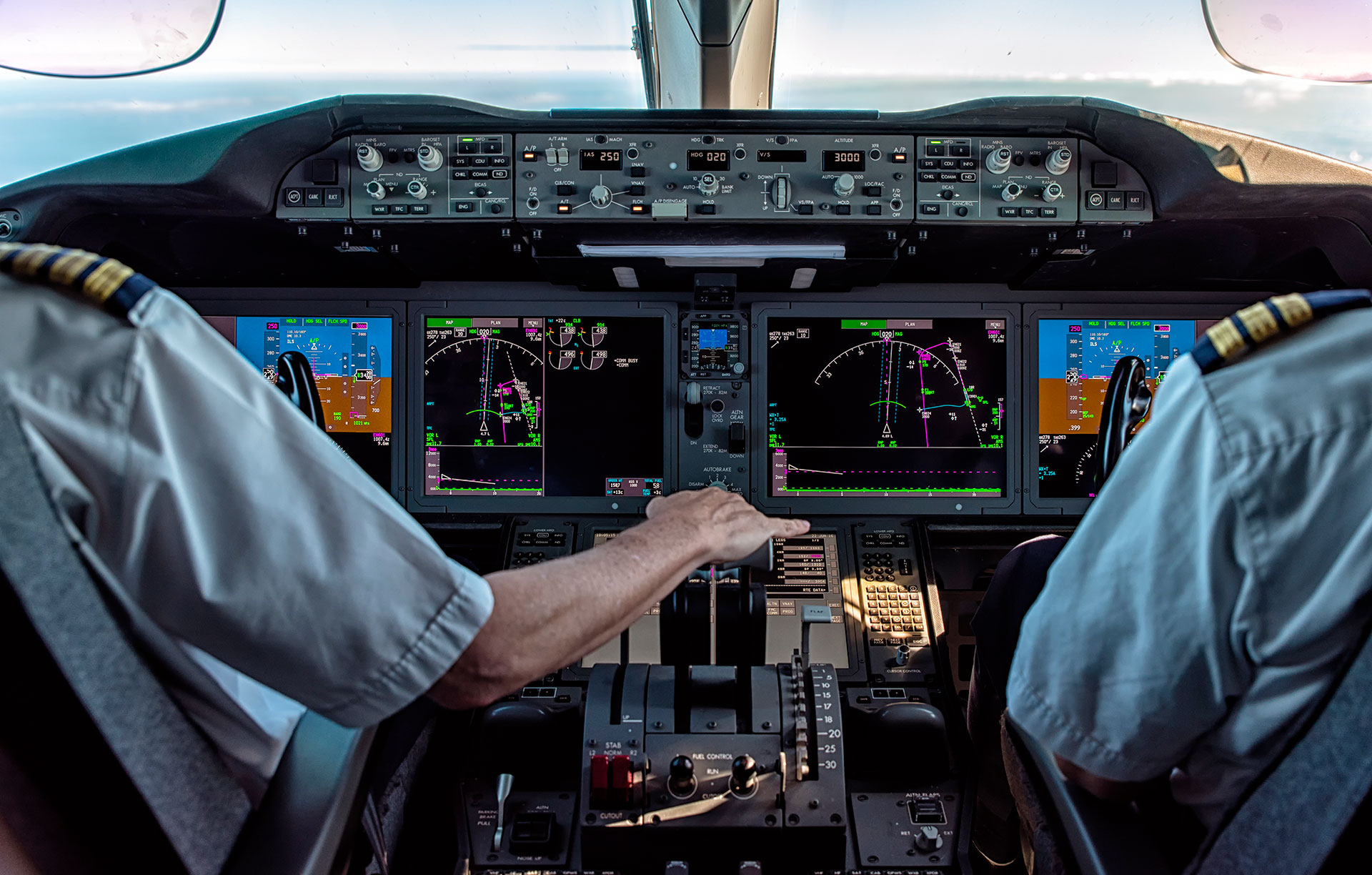
Understanding crew duty in business aviation
What does a crew's duty period cover?
A crew is not on duty only while flying. The clock starts at reporting time, well before take-off, and covers the aircraft inspection and all pre- and post-flight checks. The regulations distinguish three notions:
- Duty: any task performed for the operator, including post-flight duties.
- Flight Duty Period (FDP): from the crew's reporting time until the engines are shut down after the final sector.
- Flight time: the "chock-to-chock" time, from the aircraft first moving until it comes to rest.
In Europe, it is the flight duty period, not flight time alone, that drives most of the limits.
What is the maximum duty time?
In Europe, two regimes coexist. Airlines apply the FTL subpart of Regulation (EU) No 965/2012. A business jet chartered on demand, with 19 passenger seats or fewer, is an air taxi operation: Article 8(2) of that regulation leaves it under the older Subpart Q and national rules, and EASA targets a harmonised regime for 1 September 2028. Both texts start from the same base: a flight duty period of up to 13 hours for one or two sectors, and rest of at least 12 hours at home base or 10 hours away from base.
In air taxi operations, those 13 hours lose, among other reductions, 30 minutes per sector from the third onwards, up to 2 hours in total. The airline regime goes down to 9 hours depending on the reporting time (especially at night) and the number of sectors. In unforeseen circumstances, the commander there has a "discretion" margin of up to 2 additional hours (3 hours with an augmented crew); the rest that follows can then never be less than 10 hours.
What is the minimum rest period?
Before returning to duty, a crew must receive rest at least as long as the preceding duty, and as a minimum 12 hours at home base or 10 hours away from base. Away from base, that rest must allow an 8-hour sleep opportunity, on top of travel time and physiological needs. Regular extended recovery rest also applies (at least 36 hours including two local nights).
Long flights: augmented crews and onboard rest
On long routes, two options allow the standard duty period to be exceeded. The first is to augment the crew with a third or even fourth pilot, provided an onboard rest facility is available: a bunk or a strongly reclining seat, graded by comfort class. This combination extends the duty period to around 16 to 17 hours. The second, on routes with a technical (fuel) stop, is to bring in a relief crew to take over. The choice of aircraft is therefore decisive: our ultra-long-range jets offer these arrangements. (These thresholds belong to the airline regime; in air taxi operations, augmented crews fall under national rules and the operator's approved scheme.)
Outside Europe: the US regime
In the United States, the FAA rules (14 CFR Part 135) apply to on-demand flights. Flight time may not exceed 8 hours for a single pilot or 10 hours for two pilots over any 24 consecutive hours, with at least 10 hours of rest. This is the origin of the often-quoted "10 hours in 24" rule: a US two-pilot rule that should not be confused with the European duty period. A reform of these thresholds is under discussion but has not yet taken effect.
Europe and the United States at a glance
| Europe (EASA, airlines) | United States (FAA Part 135) | |
| What is capped | Flight duty period (report → engines off) | Flight time over 24 rolling hours |
| Standard limit | 13 h max (→ 9 h by start time and sectors) | 8 h (1 pilot) / 10 h (2 pilots) |
| Minimum rest | 12 h at home base / 10 h away | at least 10 consecutive hours |
| Margin for the unforeseen | Commander's discretion: +2 h (+3 h if augmented) | Extended rest (up to 16 h) |
| Long flights | Augmented crew + onboard rest (~16-17 h) | Relief crew |
Cumulative limits
Beyond the single day, the airline regime also caps totals: a crew member may not exceed 100 flight hours in 28 days, 900 hours a year or 1,000 hours over twelve months; duty time is limited to 60, 110 and 190 hours over 7, 14 and 28 days. So many safeguards against fatigue.
Can crew rest affect your schedule?
Yes, and it is worth anticipating. If a passenger arrives so late that the crew's duty limit risks being reached, the flight may be rescheduled to give the pilots and cabin crew their required rest, or a fresh crew may be brought in. Factoring these constraints in from the planning stage avoids unwelcome surprises: that is the whole point of organising a private flight properly, and one of the added values of a charter broker.
IBC Aviation at your service
Our teams know these rules and build them into the quote from the outset: choosing an aircraft with an onboard rest facility for long distances, planning an augmented or relief crew, allowing realistic timings. To charter a private jet in the best conditions, they provide a personalised, all-inclusive quote within the hour. And because rest matters for passengers too, see our advice on how to overcome jet lag. Available 24/7:
- France: +33 1 41 69 88 88
- Switzerland: +41 22 880 28 88
- Email: contact@ibc-aviation.com
Frequently asked questions
What is crew rest?
These are the mandatory rest periods between duties, imposed on pilots and cabin crew to prevent fatigue and keep flights safe.
What is the maximum duty time for a crew?
In Europe, the flight duty period starts from 13 hours for one or two sectors, for a business jet flown as air taxi as for an airline. It then falls with the number of sectors and, in the airline regime, down to 9 hours depending on the start time. In the United States (FAA Part 135), flight time is limited to 8 hours for one pilot and 10 hours for two pilots over 24 hours.
How much rest must a crew take?
In Europe, at least 12 hours at home base and 10 hours away from base (with an 8-hour sleep opportunity), or as long as the preceding duty if that is greater.
Why can a private flight be rescheduled because of the crew?
If a delay brings the crew close to its duty limit, the flight may be rescheduled to respect the required rest, or a fresh crew is brought in. It is a safety requirement.
How do you keep a long flight from being interrupted by crew rest?
By augmenting the crew with an extra pilot and an onboard rest facility, which extends the duty period to 16-17 hours, or by arranging a relief crew at a technical stop.