





 +41 22 880 28 88
 +33 1 41 69 88 88 (Paris)
 +352 26 20 25 53 88
 +971 55 303 5161
 +66 92 372 4680

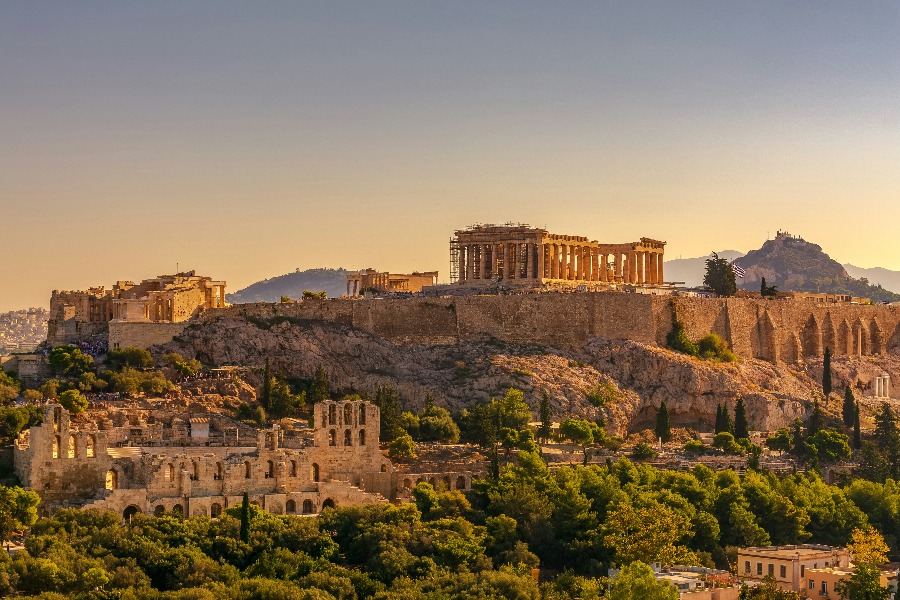
Private Jet to Greece: Athens, Mykonos, Santorini
Greece by private jet, 3 hours from Europe
From Paris, Greece is reached in 3 to 3.5 hours, from London in 3.5 to 4 hours, on a super-light, midsize or super-midsize jet. As Greece is in the Schengen Area, flights from another Schengen point arrive with no passport control; arrivals from the Gulf, Asia or London clear customs at Athens. The table below sums up the hubs and their airports.
| Destination | Private-jet airport | Good to know |
| Athens | Eleftherios Venizelos (ATH) | 24/7 hub, customs entry |
| Mykonos | Mykonos (JMK) | Short runway, slot and PPR mandatory |
| Santorini | Santorini (JTR) | Short runway, slot mandatory |
| Corfu | Corfu (CFU) | Takes large-cabin jets |
| Crete | Heraklion (HER), Chania (CHQ) | No aircraft-size constraint |
| Airportless islands | Helicopter / yacht | From Athens or Mykonos |
Matching the aircraft to the runway and securing slots is at the heart of a broker's role in Greece. To compare categories, browse our aircraft fleet, from light jets upward.
Athens, the gateway
Athens (ATH) is the country's only 24/7 business-aviation hub, with a dedicated general-aviation terminal and FBOs. Its long runways (up to about 4,000 m) impose no size constraint, even for ultra-long-range aircraft. It is the logical customs entry point before continuing to the islands. Note: since March 2025, free ramp parking has been cut to 90 minutes, beyond which a prior permission (PPR) is required. The transfer to the centre takes 35 to 45 minutes, and helicopter links serve the islands.
The Cyclades: Mykonos, Santorini, Paros
This is where expertise matters most. Mykonos (JMK) has a single runway of about 1,903 m at 123 m elevation: in practice the realistic ceiling is super-midsize, with heavy jets requiring case-by-case performance planning, especially in summer heat. The field is coordinated (confirmed slot mandatory) with a Fraport PPR, a ground time often capped at about 60 minutes at peak, and scarce overnight parking: aircraft are frequently repositioned to Kavala or Thessaloniki to park. An additional fee of about EUR 2,000 per passenger per sector applies for the mandatory general-aviation terminal in summer. See our page on Mykonos by private jet.
Santorini (JTR), with its runway of about 2,197 m, takes light to midsize jets and some super-midsize types; it is one of the most congested fields in the Aegean, and our Santorini by private jet page covers it. Paros, at 1,400 m, is limited to turboprops and small jets and has no customs (Schengen flights only). Between the islands, helicopters link Mykonos, Santorini, Paros and Naxos in about thirty minutes.
Corfu, Crete and the airportless islands
Beyond the Cyclades, Corfu (CFU), at 2,373 m, takes most business jets including large cabins, and suits yacht-based itineraries. In Crete, Heraklion (HER) and Chania (CHQ) impose no size constraint; Chania is a joint civil-military field (Souda) where PPR is required and civil movements can be held during military activity. Our Heraklion by private jet page covers eastern Crete.
Many islands have no jet airport (Ios, Folegandros, Serifos), and some have only a short strip closed to jets (Naxos, Milos). They are reached by helicopter from Athens or Mykonos, or by yacht from the nearest airport, a last leg the broker builds into the itinerary.
From Europe, the Gulf and Asia: which jet, which access?
Flight times are indicative:
- From Europe: Athens in 3 to 4 hours from Paris or London, on a super-light to super-midsize jet.
- From the Gulf: Dubai to Athens in 5 to 5.5 hours, on a super-midsize or long-range jet.
- From Asia: Bangkok to Athens is a 10 to 11-hour leg on an ultra-long-range aircraft.
Access is the real subject. The island airports are coordinated (Level 3) in summer: a confirmed slot, whose ID appears in the flight plan, is mandatory, and a plan filed more than fifteen minutes off the slot is automatically suspended. Add the Fraport PPR, terminal fees, ramp-vacate rules and repositioning to park. Securing slots, PPR, handling and helicopter as a single plan is precisely a broker's role. For the choice of aircraft, see our guide on private jet range by aircraft category, and our comparison of private jet vs first class.
Planning your trip to Greece with IBC Aviation
As an independent broker, IBC Aviation compares the aircraft on the market and selects the one whose performance matches the target runway. Our teams secure the island slots and PPR, coordinate parking (including repositioning to Kavala or Thessaloniki), the ground handling and the last leg by helicopter or yacht. This island orchestration is at the heart of our work, in the same vein as our other guides such as Japan. Discover our approach on our private jet charter and concierge services pages, and our benchmarks on private jet rental cost.
Private jet charter with IBC Aviation:
Our teams advise you on the private jet best suited to your itinerary and your needs, and arrange your trip to or from Greece. Available 24/7:
- France: +33 1 41 69 88 88
- Switzerland: +41 22 880 28 88
- Dubai: +971 55 303 5161
- Bangkok: +66 92 372 4680
- Email: contact@ibc-aviation.com
Frequently asked questions
Which airport for Mykonos and Santorini by private jet?
Each island has its airport (JMK, JTR), but the runways are short: Mykonos caps in practice at super-midsize, Santorini at light-to-midsize jets. A confirmed slot and a PPR are mandatory in summer, and the aircraft is often repositioned to park.
Can you reach the small Cyclades with no airport?
Yes, by helicopter from Athens or Mykonos, or by yacht from the nearest airport. Islands such as Ios, Folegandros or Serifos have no airport; Naxos and Milos have only a short strip closed to jets.
Do you need a slot for the Greek islands?
Yes. The island airports are coordinated (Level 3) in summer: a confirmed slot, whose ID appears in the flight plan, is mandatory, and a plan filed more than fifteen minutes off the slot is automatically suspended.
How long is the flight to Greece?
About 3 to 4 hours from Paris or London to Athens, on a super-light to super-midsize jet. From Dubai, allow 5 to 5.5 hours. The islands add a short 20 to 25-minute hop from Athens.
What aircraft size for Mykonos?
The runway of about 1,903 m, at 123 m elevation, caps operations in practice at super-midsize, especially in heat. Heavy and long-range jets require case-by-case performance planning.
What is the best season for Greece?
High season runs from mid-June to mid-September, when pressure on slots and parking is highest. May, June and September-October offer pleasant weather with smoother access.